Bringing dynamic route intelligence to UGVs at the edge
Discover how Carmenta Terrain Router integrates with ROS 2 Nav2 to enable real-time UGV route replanning, terrain-aware navigation, and improved survivability.
Read more
Unmanned aerial vehicles (UAVs) are an integral part of current and future military operations and are ubiquitous. Additionally, they have become an established component of military logistics, playing an important role in supplying troops on the battlefield.
In military operations, the environment can rapidly and drastically change, rendering previously accurate geospatial data, such as terrain or building information, obsolete. Moreover, UAVs that transport important loads to the front line have to navigate through constantly changing environments and threats.
Real-time geospatial analysis for UAVs can be used to cope with these dynamic challenges, enhancing situational awareness on the battlefield and supporting both human and autonomous decision-making. This capability improves the predictability and reliability of UAV resupply missions, and therefore the probability of mission success.
This paper will focus on the critical final stage, known as the ‘last mile’, which typically presents the most unknown, complex, and dangerous situations. It is in this stage that unmanned aerial systems (UAS) can create the greatest impact.
Geospatial analysis enhances UAS capabilities in military logistics by providing accurate, timely and actionable information for decision-making, planning and executing operations across diverse and often challenging environments. It improves situational awareness on the battlefield and supports both human and autonomous decision-making processes, from platform selection to route calculation and selection.
Using geospatial analysis increases the predictability and reliability of resupplies by mitigating the risks associated with last-mile deliveries, with the additional benefit of also reducing costs.
The analysis described in this paper can be combined to assist in various UAS logistical concepts, including, but not limited to:
Geospatial analysis also serves a broader purpose beyond planning and executing resupplies. The platforms utilised for these missions usually encompass multiple sensors, which could be ingested into geospatial applications to improve real-time situational awareness and provide valuable updates on the mission and geospatial environment. The same geospatial capabilities can also be used for training and simulation, providing greater value to its users.
In a hypothetical scenario for military last-mile delivery, a front-line unit could be situated in a hostile environment, running low on ammunition and first aid equipment, and in urgent need for supplies to ensure the safety of both personnel and civilians. In a situation where it is unsafe to get the supplies directly to the front-line personnel via helicopter, and there is not enough time to deliver them in heavily armoured platforms, a heavy-lift UAS capability would be another option.
In this scenario, our focus is on determining how to get supplies to the troops. The following questions need to be addressed and resolved:
In a scenario like the above, informed and timely decisions are imperative, and this is where real-time geospatial analysis becomes invaluable.
Geospatial 3D analysis plays a crucial role in military last-mile resupply operations by providing valuable insights into the three-dimensional aspects of the environment. In the following section, we explore how 3D coverage analysis can assist in optimising and securing last-mile resupply efforts in scenarios similar to the one described above.
3D coverage analysis helps assess terrain elevation, slopes and obstacles, providing a comprehensive understanding of the physical environment. This information is crucial for determining the most suitable flight routes for last-mile resupply, avoiding difficult terrain and ensuring efficient movement.
Terrain analysis aids in understanding where the UAV can land, whether the site is accessible to front-line personnel, and whether it provides sufficient cover.
3D mapping helps identify natural and man-made obstacles in the operational area, including buildings, vegetation and bodies of water. By avoiding or mitigating these obstacles, military planners can optimise UAV resupply routes, reduce the risk of damage to supplies, and enhance overall mission success.
The identification of obstacles within the operational area is crucial for determining the most suitable UAV flight path to safely get to the target and back. In addition, it helps to identify possible escape routes. As with terrain analysis, identifying obstacles assists in understanding where the UAV can land and whether these areas can be reached by ground forces.
3D coverage analysis enables the evaluation of line-of-sight (LOS) conditions between various points in the operational area. LOS analysis helps identify potential communication challenges and areas where resupply drops or pick-ups may be more vulnerable to enemy observation or interference.
LOS analysis provides information on areas where the drone can safely operate without detection or interception, while staying within communication range and maintaining GNSS signal for navigation. It also makes it possible to identify potential threats in the drop zone for ground forces.
Analysis of 3D coverage assists in the selection of optimal drop zones for airborne resupply operations. Factors such as elevation, wind patterns and surrounding terrain are considered to ensure safe and accurate delivery of supplies to the intended locations.
These 3D analyses provide information to identify suitable drop zones that ground troops can safely reach, and to identify alternative drop zones if the original plan has to change.
Airspace deconfliction is another area where 3D coverage analysis proves invaluable. Understanding the vertical distribution of air traffic and potential obstacles assists in coordinating safe and efficient air operations.
Ensuring airspace deconfliction is crucial for safe UAV operations and provides guidance on where the UAV can fly without entering restricted or hostile airspace. Additionally, this has an influence on the UAV flight route and thus also on the arrival time.
Analysing 3D coverage assists in identifying areas that offer natural stealth and concealment for resupply operations, serving as a fundamental asset in ensuring safe UAV operations. This analysis also offers insight into the level of concealment potential drop zones provide. Selecting flight routes and drop zones with natural cover reduces the risk of detection by hostile forces.
Assessing weather conditions in the vertical dimension is a critical aspect of 3D coverage analysis. This analysis considers the impact of wind, turbulence and other atmospheric factors on UAV operations, providing essential information for planning safe flight routes and drop zones.
Weather analyses provides information on whether flying is possible at all and if so, under what performance conditions. In addition, they help identify dangerous weather zones that may need to be avoided. Weather conditions also play a decisive role in the selection of a drop zone, ensuring that the UAV can remain over the drop zone long enough and maintain sufficient stability to deliver its payload.
Finally, 3D coverage analysis enhances precision navigation by providing detailed information about the three-dimensional aspects of the environment. This is especially important for the low-altitude and precise navigation required in last-mile resupply missions.
The following sections describe the geospatial analysis capabilities that Carmenta’s technology provides to support resupply missions in several scenarios. While the Carmenta toolkit offers a wide range of capabilities beyond those described below, the highlighted tools are particularly useful in resupply scenarios.
Each analysis capability can be customised to be used individually, or in combination. Typically, it is the combination of highly configurable tools that generate real-world value in complex scenarios. In the hypothetical military drone delivery scenario described above, all the analysis tools can be combined to:
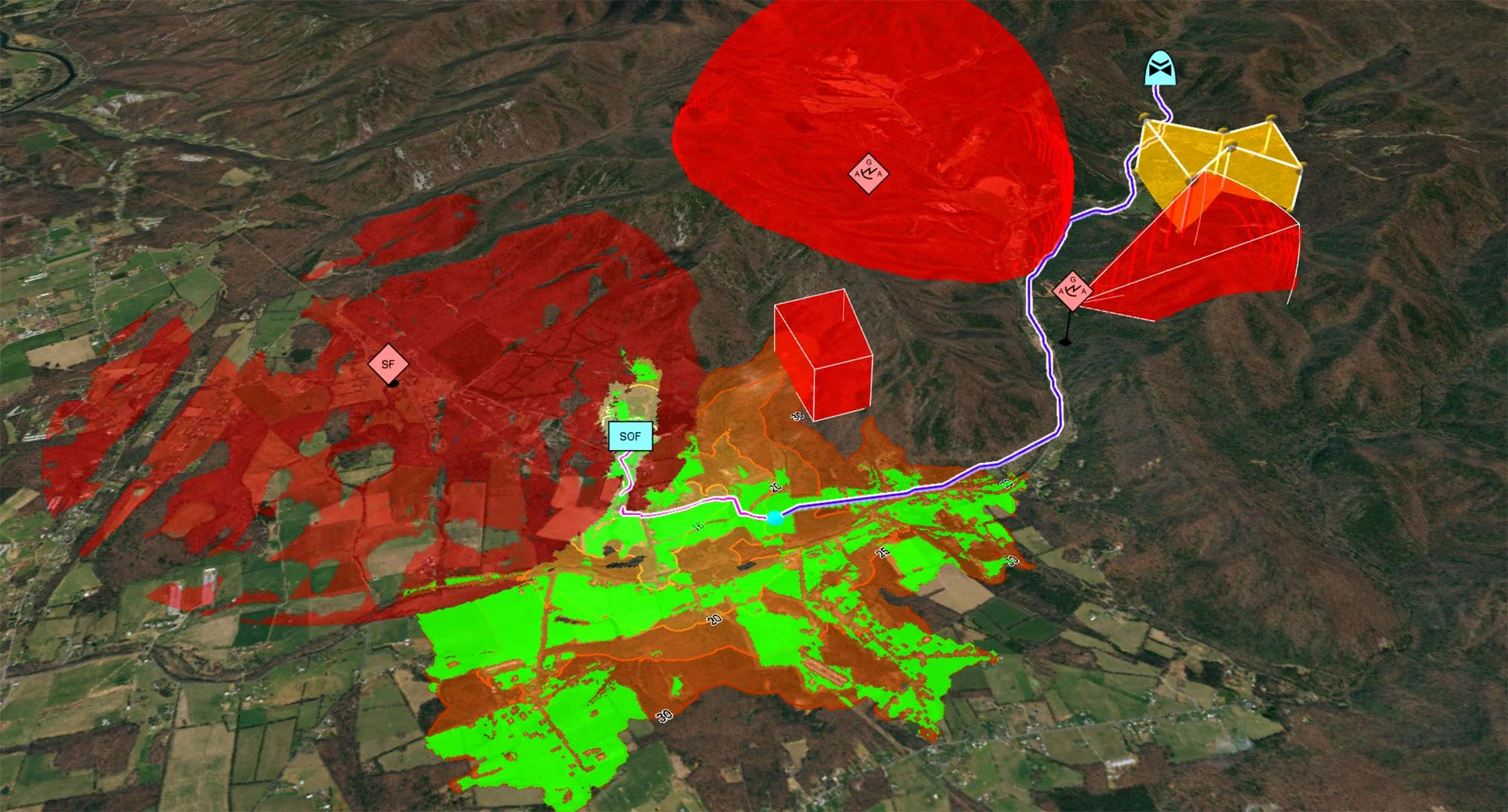
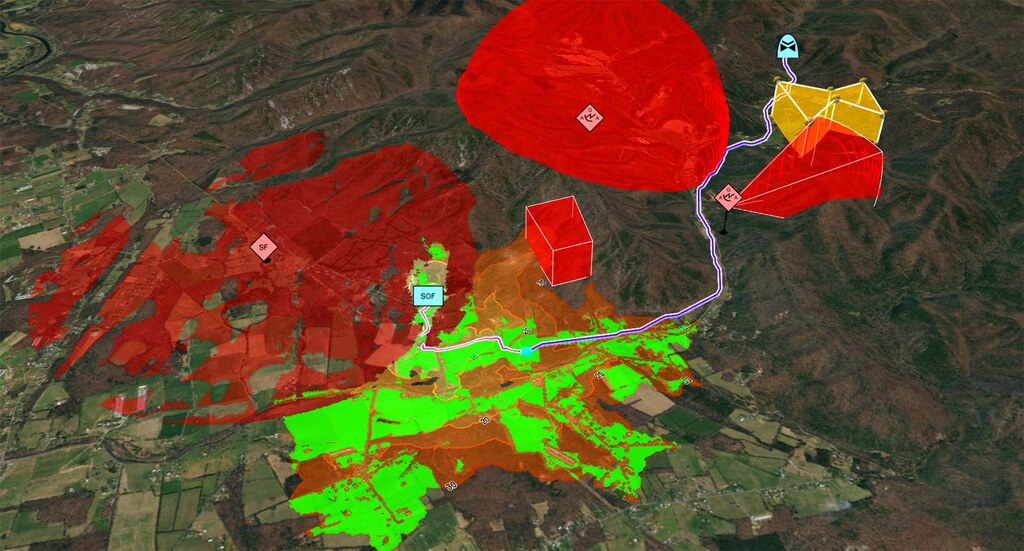
Figure 1 (Combined Analysis for Resupply) below shows an example application that combines capabilities to solve the problems of the resupply scenario above. The example includes enemy positions and their calculated visibility, enemy radar calculated coverage, partially and fully restricted areas, friendly UAS logistic platform location, friendly troops’ location in need of the resupply, the areas the troops can reach within defined timeframes, and potential UAV landing sites within range.
Carmenta’s UAV routing capabilities calculate a safe, efficient nap-of-earth flight route, considering the UAVs flight properties, terrain, exposure, and other analysis tools that are required as inputs. Not only does this provide a flight route to the destination, but it also is used to calculate the return legs, alternative routes, and escape routes in real time.
The calculation generates accurate journey times for the flight routes, which assists in deciding when assets need to depart. Ensuring synchronisation between UAV arrival and troop (Figure 2 – Tactical Air Routing) movement is essential to avoid inefficiency and potential danger. For instance, it would be counterproductive for the UAV to arrive early, or for the UAV to do a five-minute journey, while the troops travel for hours to get to the drop location.
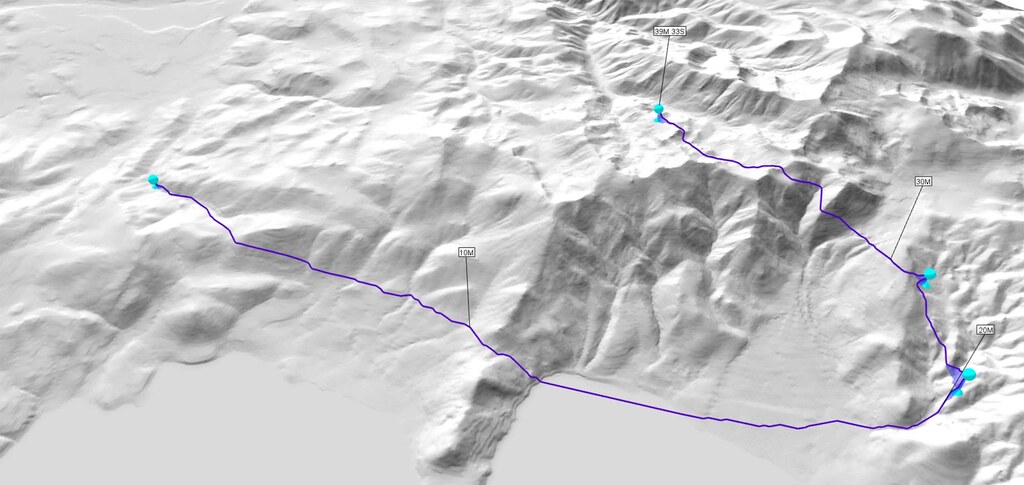
Ridges and valleys are extremely important for UAVs to move safely and undetected. Carmenta’s analysis capabilities ensure that ridges, valleys and other terrain features can be used or avoided, on the appropriate side, as dictated by operational requirements.

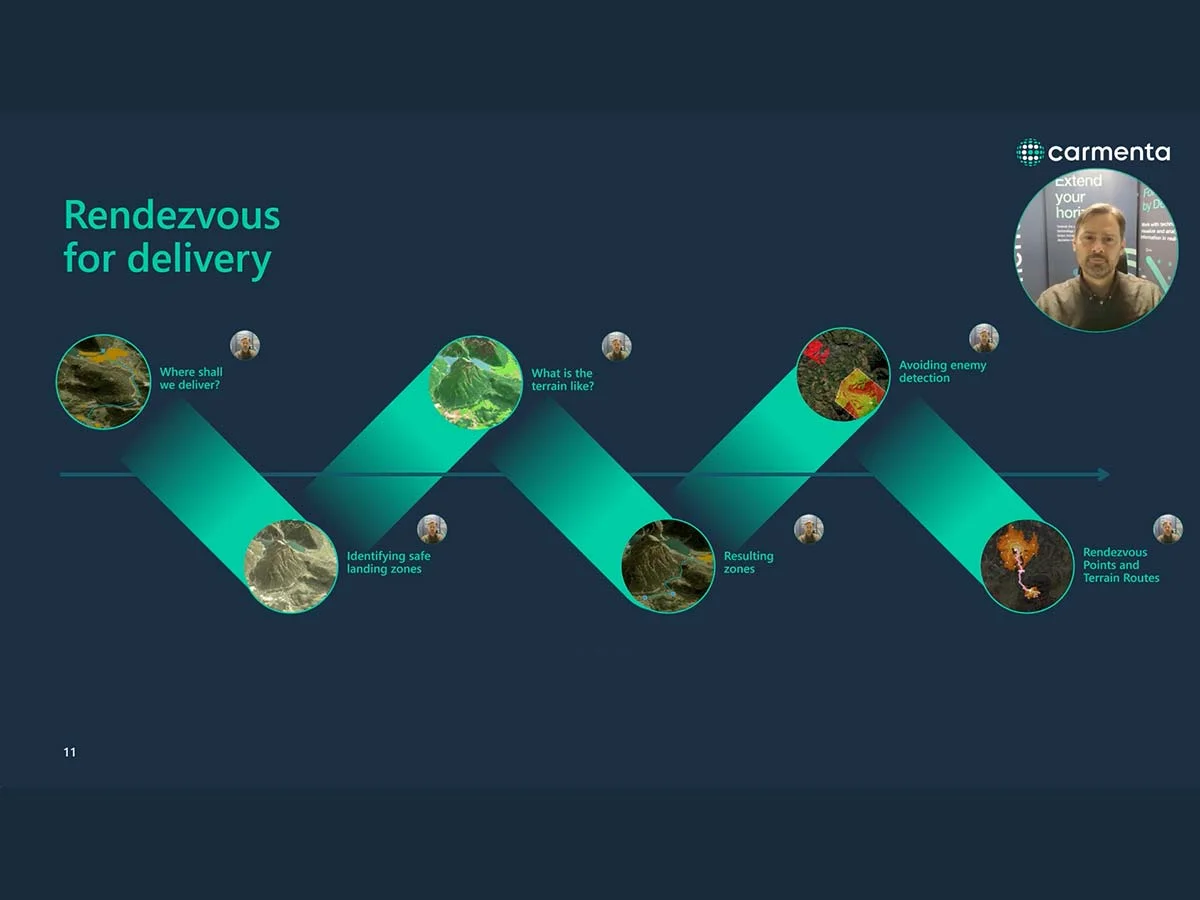
Carmenta’s technology can be used to calculate safe UAV landing, supply and pick-up sites.
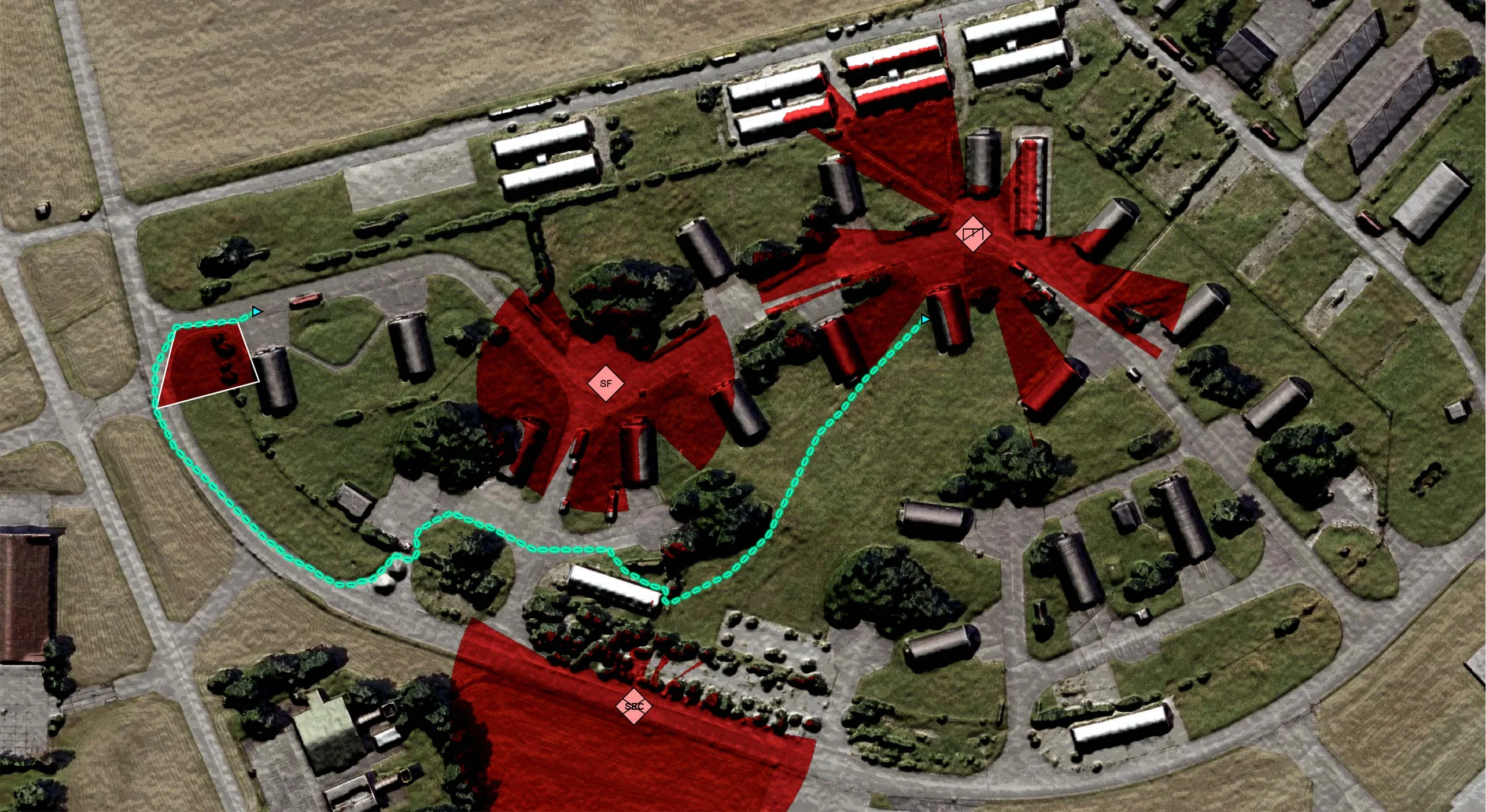
This analysis combines various analysis capabilities and data types, such as terrain, land use, buildings, infrastructure, roads, geodata, 3D models, and the UAS characteristics to calculate sites that are suitable for delivery and pick-up locations, as well as emergency landing zones. Custom configurations can be added, such as ensuring the site can be reached within a specified time or distance, if there is reduced capacity (such as inability to ascend), or ensuring that the site is accessible on foot or vehicle, to recover the delivery or platform.
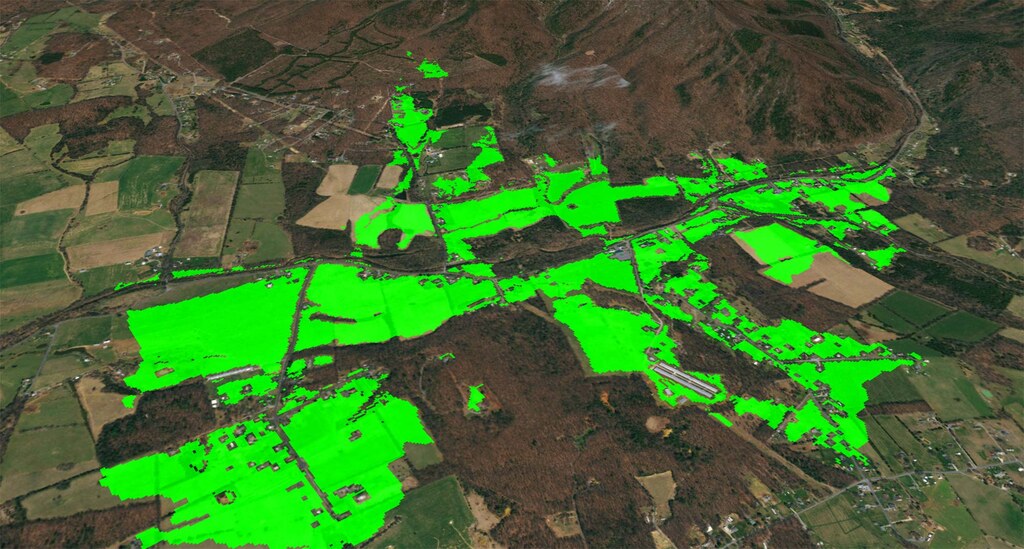
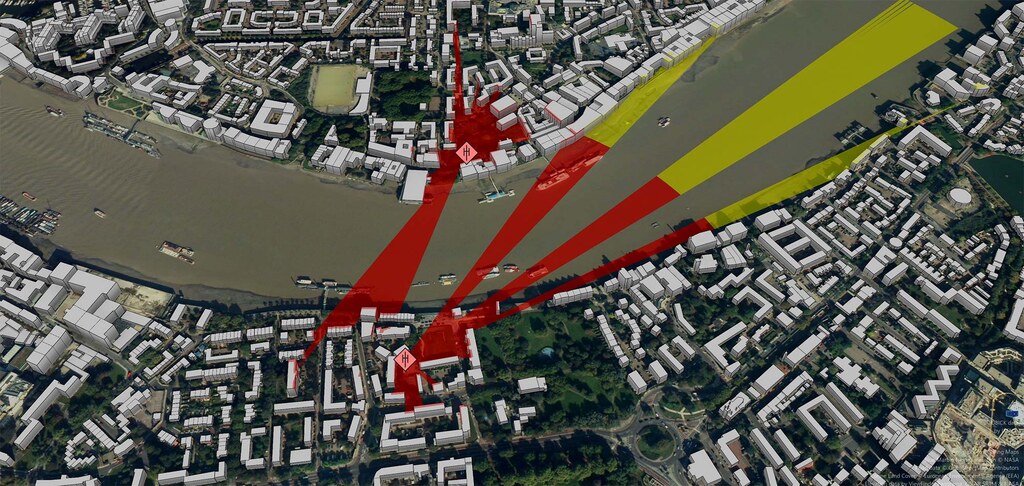
Carmentas’s technology has powerful capabilities for LOS analysis, which assists in deciding where to place assets or sensors, as well as analysing what the enemy can see. This information can be used to ensure a selected location is out of view from threats, as well as ensuring all calculated routes remain out of sight.
Figure 5 (Line-of-sight) shows the LOS from two threats, visualising the range from the two threats’ weapons in red, and the range of their visibility in yellow.
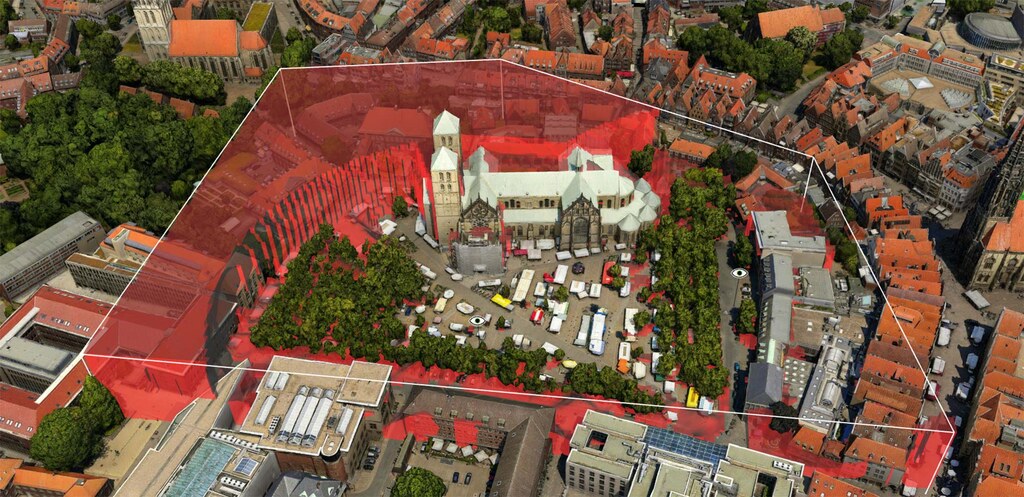
Similar to the LOS analysis above, Carmenta’s capabilities utilise airspace coverage analysis to understand the visibility from observers in 3D, providing accurate results and visualising the coverage from sensors and observers in full 3D.
This analysis can be performed in real time, ensuring that UAV flight routes avoid threats from optical and radar sensors, therefore reducing enemy tracking and engaging capabilities.
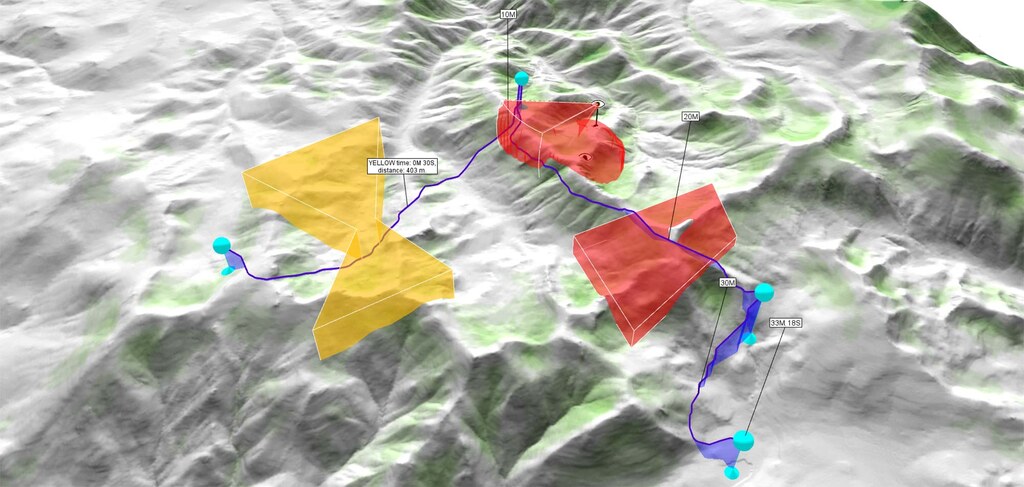
Combining analysis capabilities with operational data is vital to ensure that the output of tools is accurate. Sensor coverage and manual data, such as restricted areas, can be combined to ensure UAV flight routes abide by all operational limits.
Carmenta’s geographical analysis functions support a large amount of operational data as parameters in real time and can therefore be applied to complex application scenarios.
Figure 7 (Enemy Sensors) shows a flight route calculated in real time, minimising time in a limited restricted area in yellow, and avoiding a restricted area and two enemy viewsheds in red.
Sometimes, the exact location of enemy assets is unknown, but can be narrowed down to an area. Despite the uncertainties, such information can be used to estimate coverage, enabling the calculation of UAV flight routes based on the likelihood of maintaining concealment. While it may be impossible to stay completely hidden within a large area, Camenta’s analysis capabilities can be used to identify routes with the lowest risk for exposure.
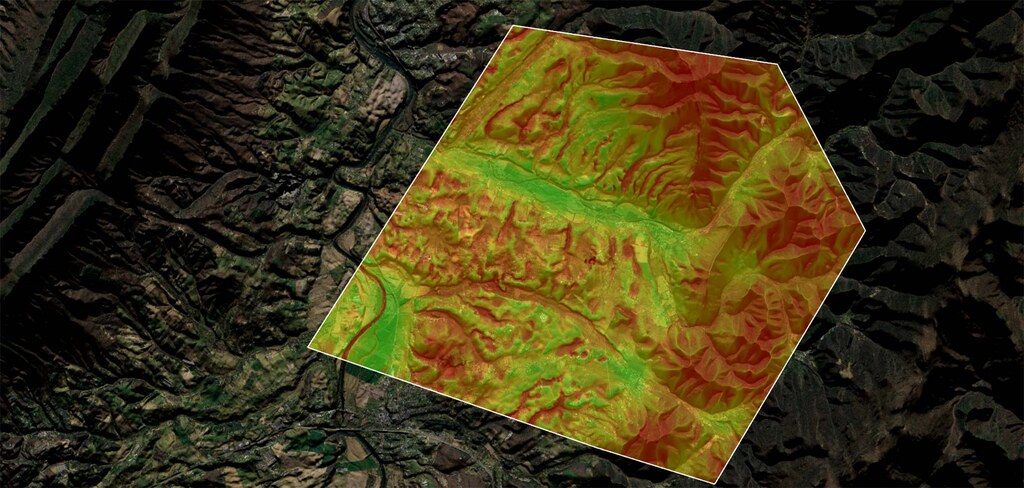
Figure 8 (Visibility Exposure) shows the visibility index calculation. The percentage of exposure to the surroundings of the defined area is displayed (in green to red).
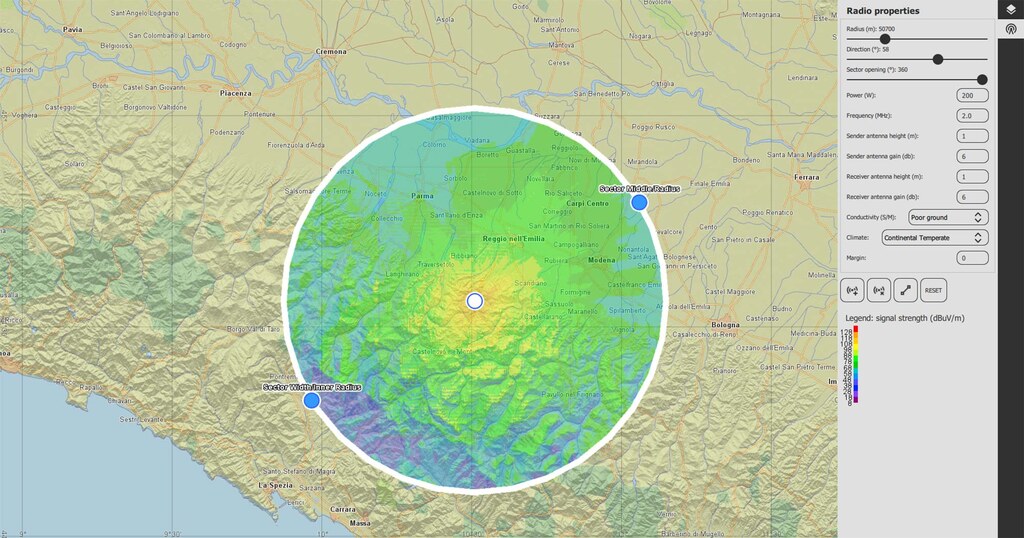
Carmenta’s custom propagation analysis capabilities enable users to visualise alternative propagation models. The same LOS, visibility and coverage analyse discussed above can be used with various other propagation models, such as the Longley-Rice model for radio frequency (RF) propagation, sound propagation models for above or below surface, as well as trajectory propagation models.
This type of advanced analysis can be used to enhance the situational awareness and predictability on the battlefield, therefore generating safer UAV flight routes and missions. For example, Carmenta’s custom propagation can be used for the following analyses:
Figure 9 shows the Longley-Rice RF propagation model.
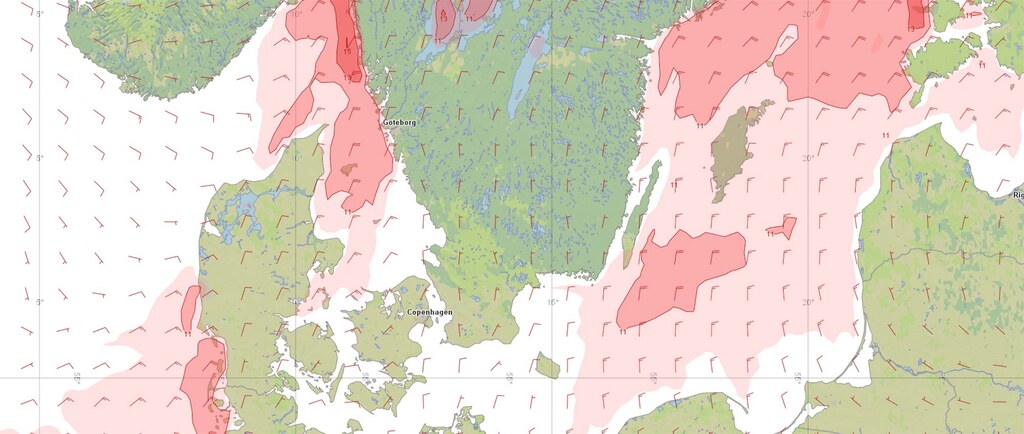
Weather is an important factor in understanding the battlefield, which can often be overlooked. Usually, wind is considered as it impacts UAV availability, and daylight is considered as it impacts the visibility.
However, weather has a greater impact across the battle space. UAV flight routes can b e impacted due to rain, wind and cloud cover, which not only impact the speed, but also the capabilities to lift payloads. For example, a UAV can carry less payload in rain or wind. Another example is that monitoring an area with UAVs becomes more difficult in dense cloud cover.
Visibility can also be affected by the sun, moon, clouds, rain and fog. Carmenta’s support of various weather formats such as Grib1 and Grib2 and analyses based on them ensure that payloads can be transported by UAV and arrive successfully at the front line.
Geospatial analysis enhances UAV capabilities for military logistics by providing accurate, timely and actionable information for decision-making, planning and executing operations in diverse and often challenging environments. It plays an indispensable role in enhancing military resupply operations, particularly in navigating the complexities of the critical ‘last-mile’ stage.
As military operations continue to evolve, the importance of geospatial analysis in ensuring mission success and enhancing situational awareness cannot be overstated. Through detailed exploration of geospatial analysis capabilities, this paper demonstrates the significant impact that advanced technology can have for resupply missions.
By leveraging advanced technologies and customisable tools, such as those offered by Carmenta, real-time geospatial analysis helps answer crucial questions that determine the success of a mission.
Carmenta’s geospatial analysis tools provide the capabilities that can help military personnel or autonomous systems make these informed decisions, not only for the scenario explored in this paper, but also for many others.
Watch our on-demand webinar about the evolving role of Uncrewed Aerial Vehicles (UAVs) in military logistics. Sign up to get instant access.
Discover how Carmenta Terrain Router integrates with ROS 2 Nav2 to enable real-time UGV route replanning, terrain-aware navigation, and improved survivability.
Read more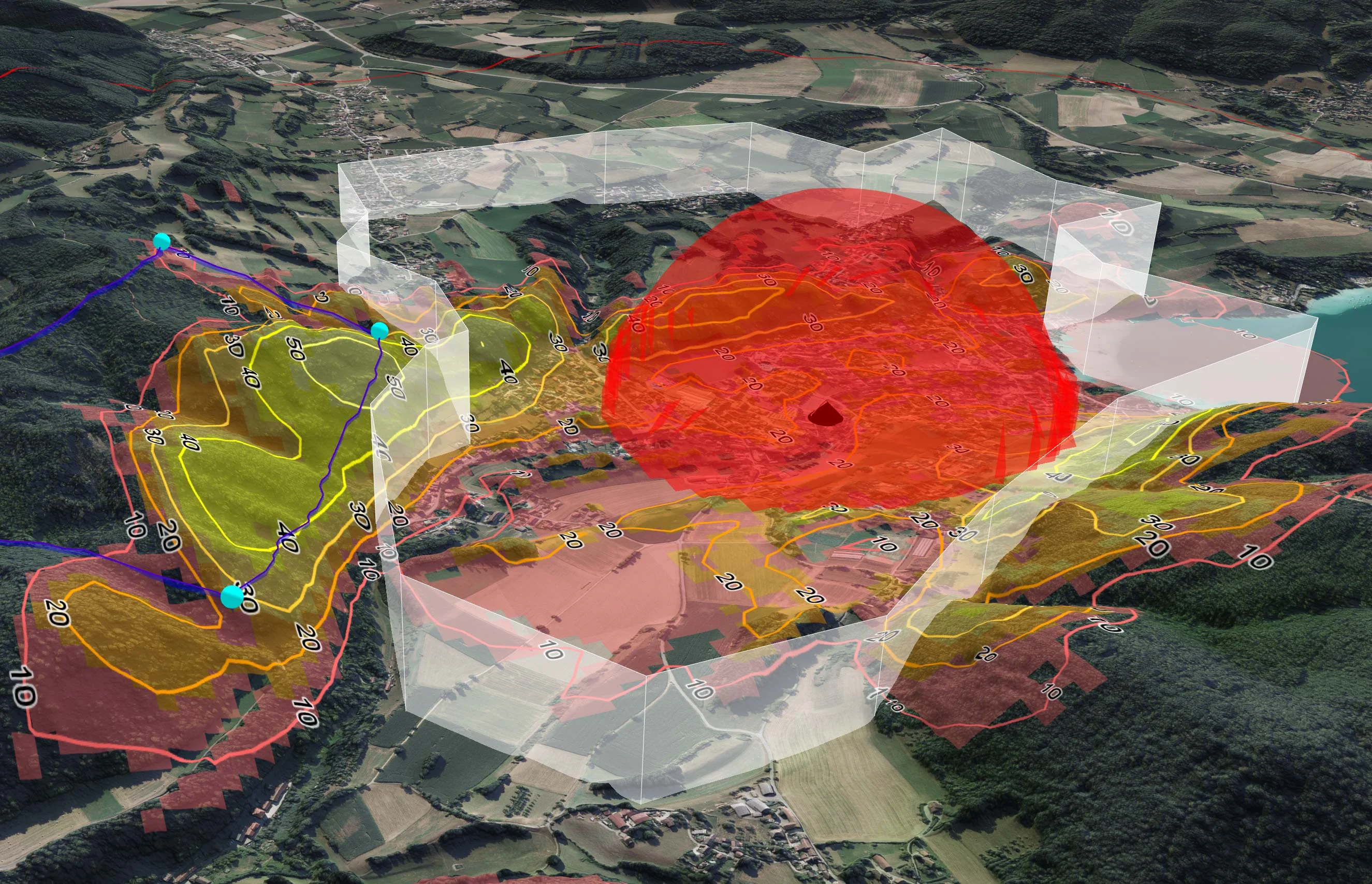
TRL Accel are currently developing a lightweight, modular UAS demonstrator that requires a high-performance C2 software solution. To solve several technical challenges and keep ambitious timelines on track, they turned to Carmenta UAS Mission Kit.
Read more
The evolving threat landscape in military operations underscores the importance of precise, adaptive, and intelligence-driven mission planning. Explore how geospatial analysis empowers UAVs to adapt to these challenges by enhancing situational awareness and supporting human and autonomous decision-making processes.
Read more