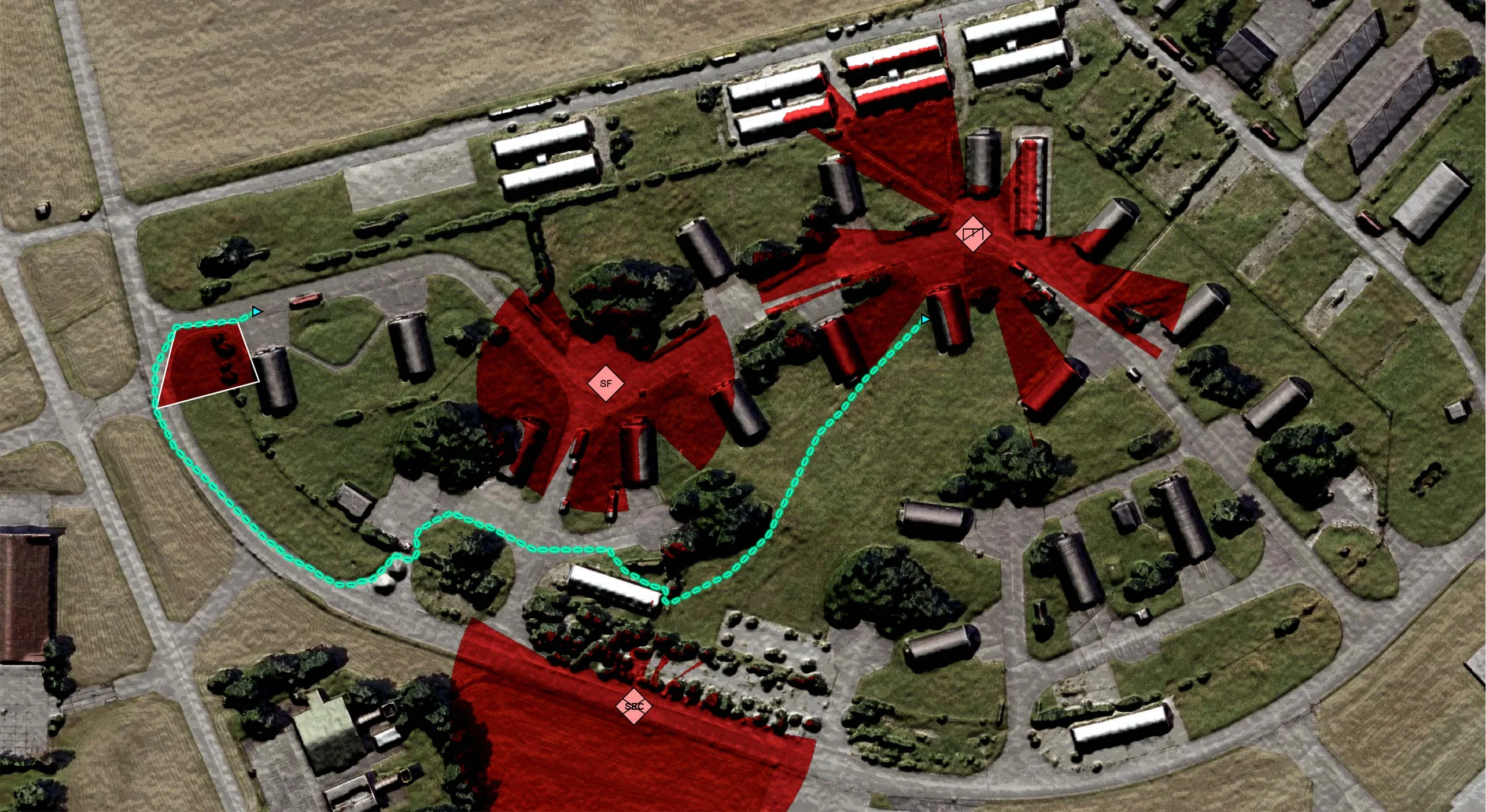
Bringing dynamic route intelligence to UGVs at the edge
Discover how Carmenta Terrain Router integrates with ROS 2 Nav2 to enable real-time UGV route replanning, terrain-aware navigation, and improved survivability.
Read more
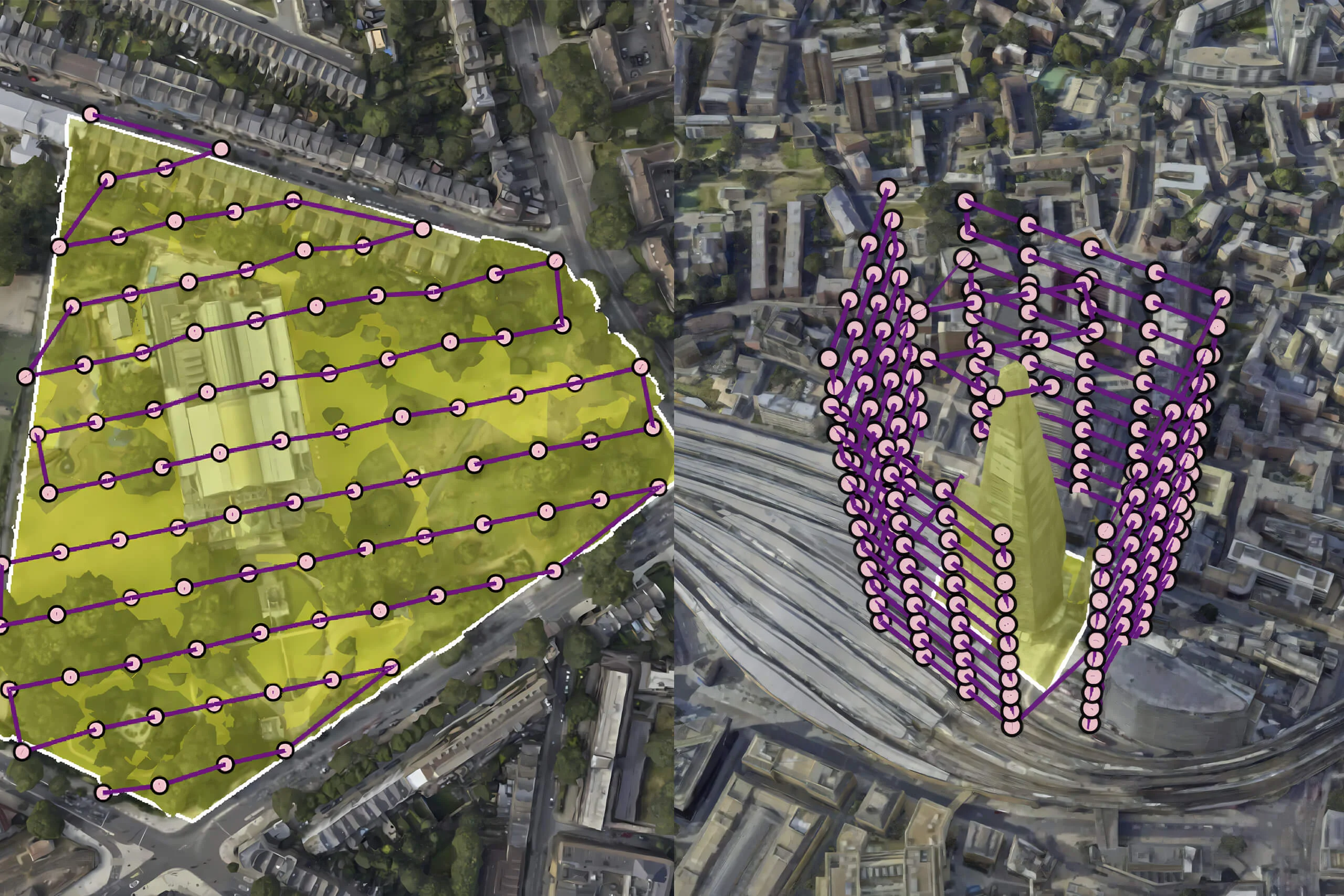
When drones take to the air for mapping or inspection missions, the paths they follow aren’t random, they’re carefully designed patterns that balance efficiency, coverage, and data quality.
In this article we will explore some of the challenges and the sophisticated technology that transforms complex geometric problems into optimized aerial routes.
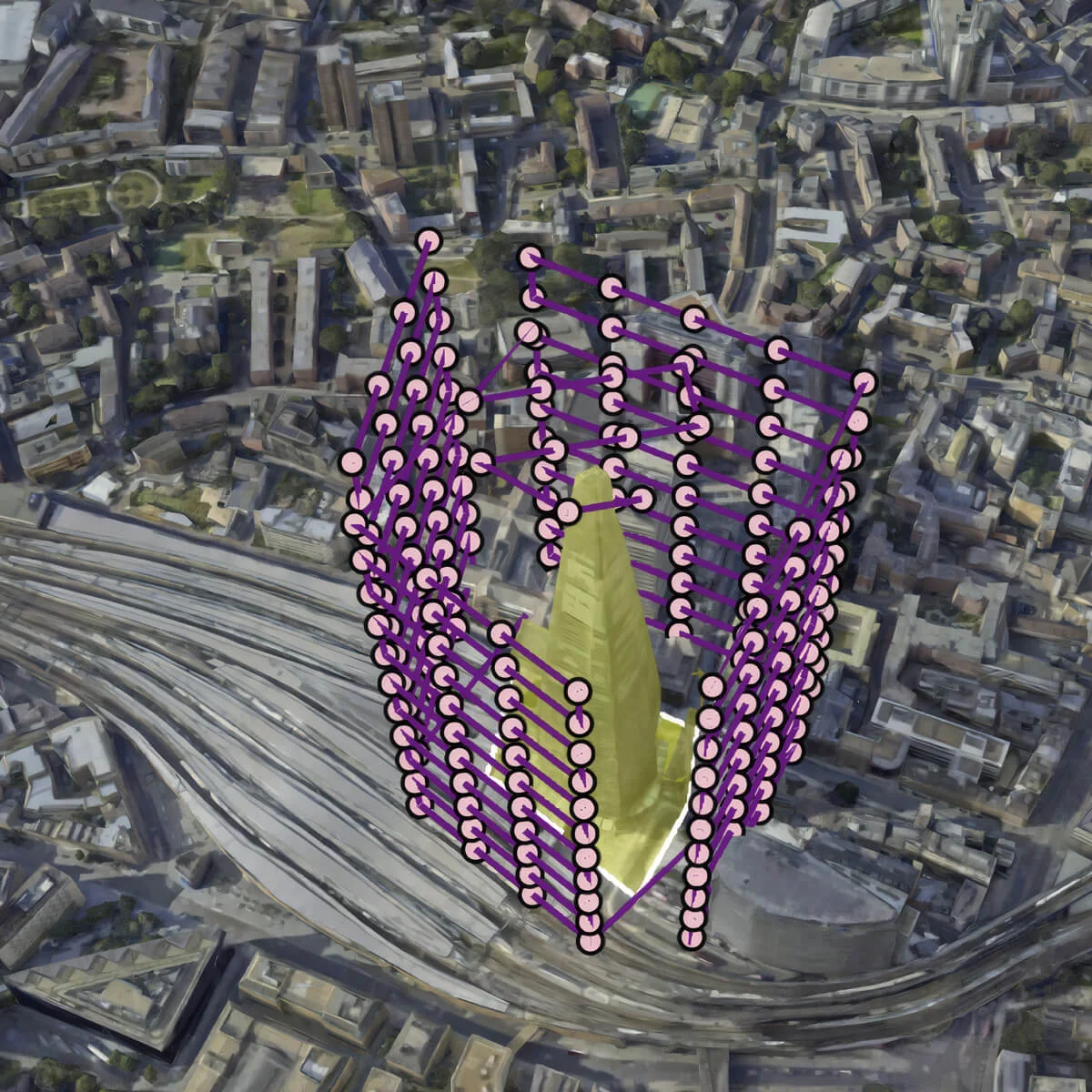
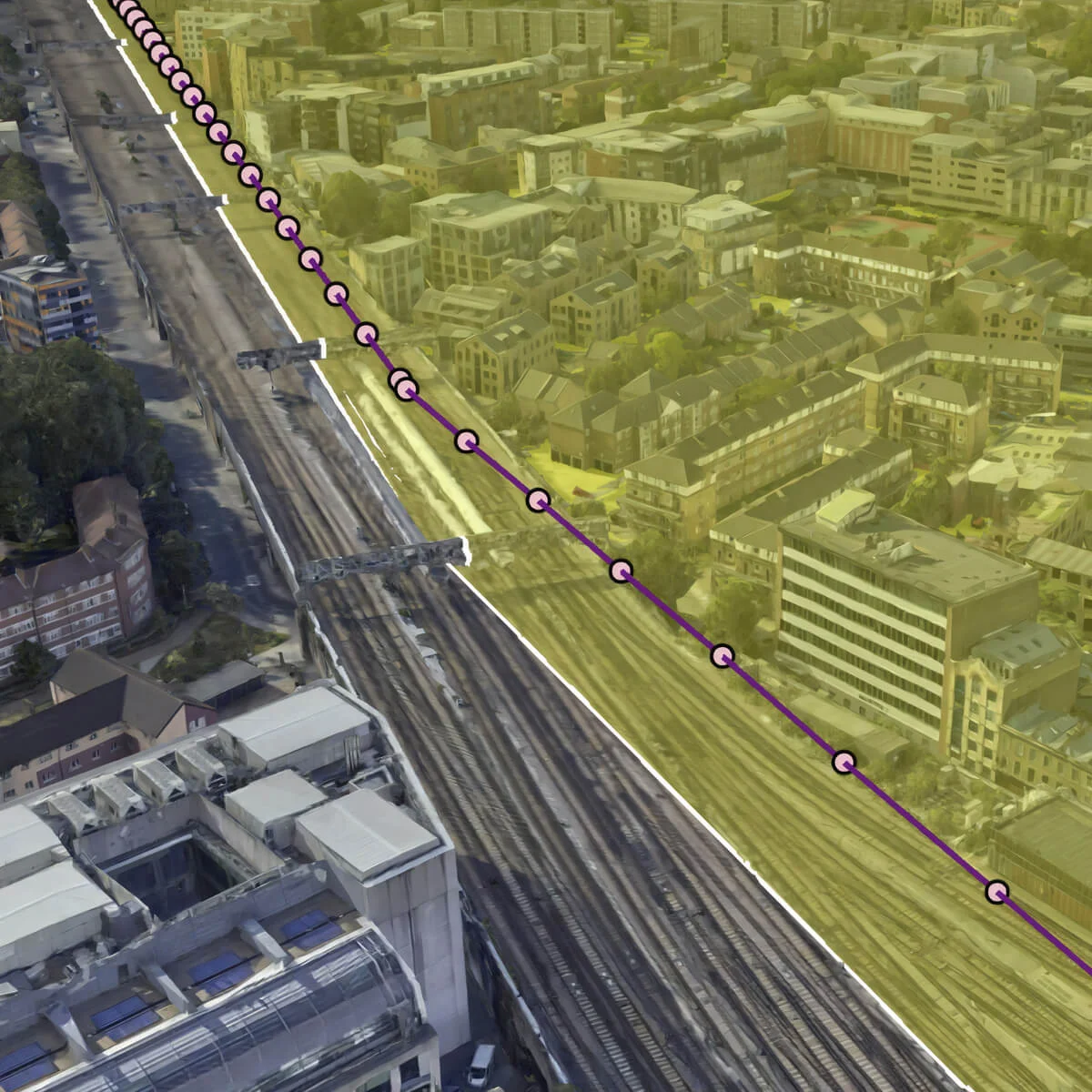
The 3D maps used in these examples are provided by Get Mapping Inc and offer high-resolution models of central London.
Imagine photographing every centimeter of a construction site by taking hundreds of overlapping pictures. Now imagine doing it from the air, carefully adjusting for hills, buildings, and ensuring the images stay clear and consistent. That’s the core challenge of flight planning.
The goal is simple: Cover every spot with the same high quality. Miss a small area, and you risk losing important details. Add too much overlap, and you waste time and money.
Modern drones must navigate this balance while accounting for:
No single flight pattern works for all scenarios. The choice of pattern dramatically affects mission outcomes. A construction site mapped with properly overlapping parallel lines might yield centimeter-accurate 3D models, while an improper pattern could create data gaps rendering the entire dataset unusable.
That’s why we’ve developed specialized patterns to address different survey requirements:
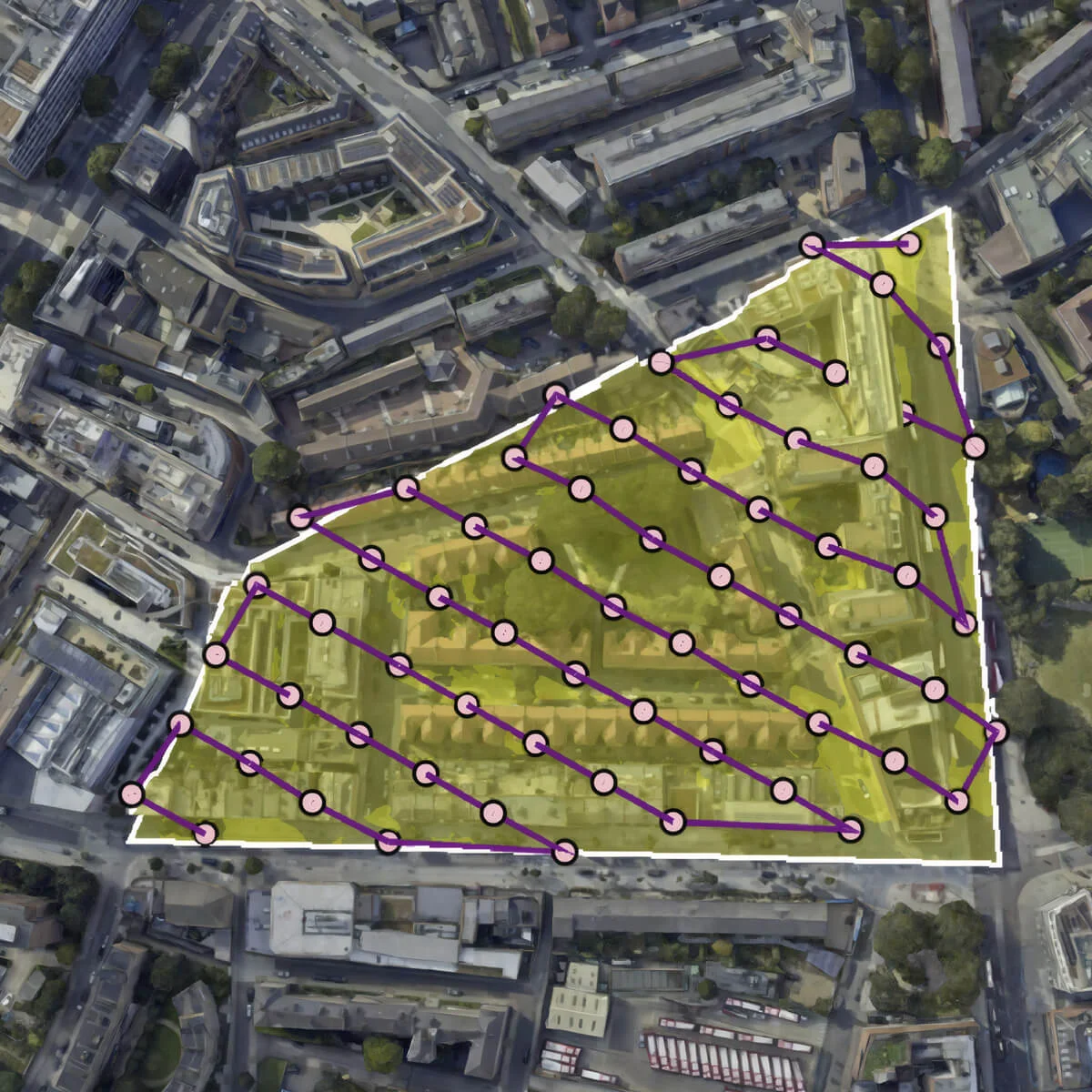
These use straight, back-and-forth lines to systematically cover large areas. They excel in mapping open terrain where efficiency is crucial.
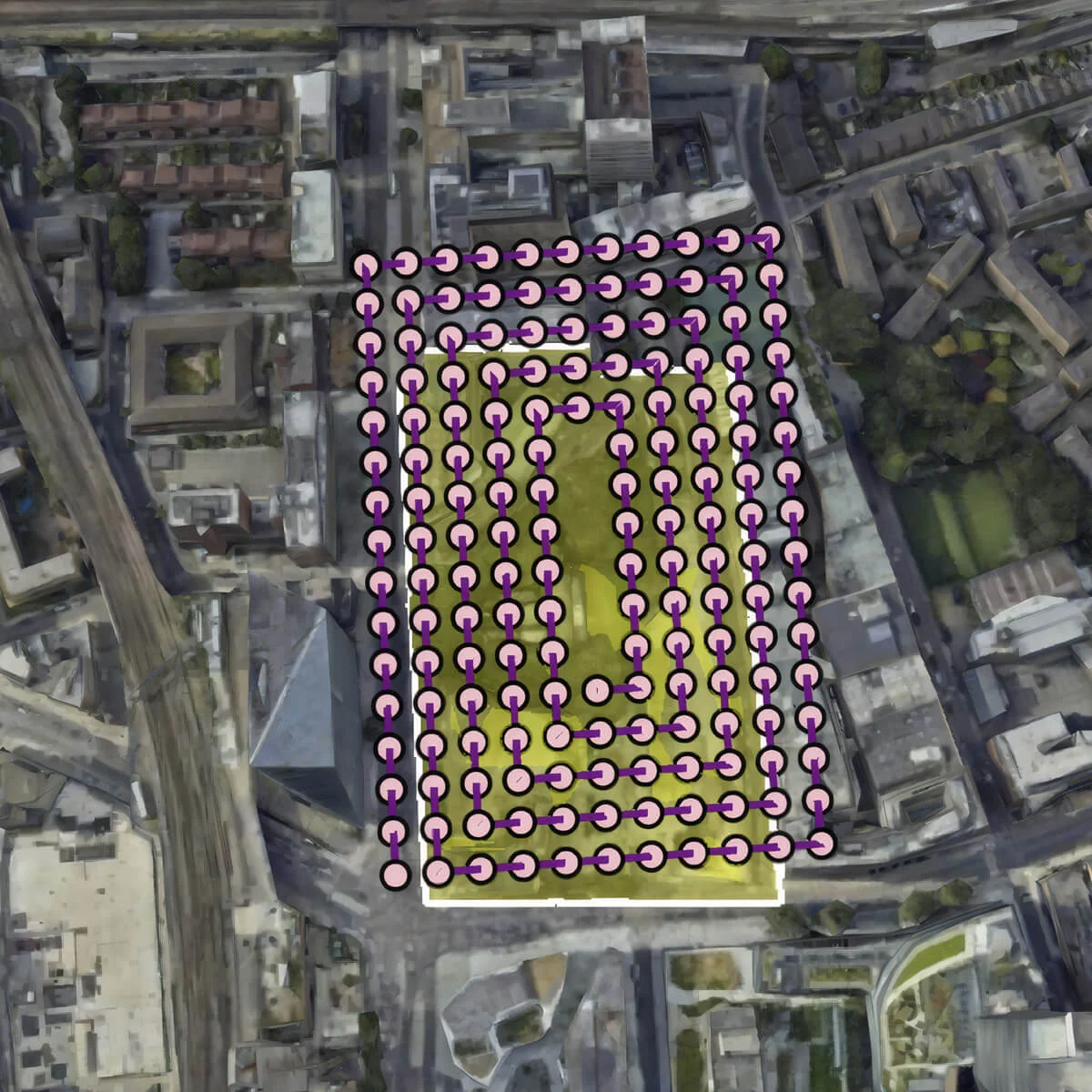
These start at the perimeter and work inwards or outwards, minimizing sharp turns. They’re ideal for sensors that need time to stabilize after direction changes.
These wrap around 3D objects like buildings or towers, capturing all sides with consistent standoff distance. They transform complex infrastructure inspection from manual art to automated science.
These follow linear features like roads, pipelines or fence lines, maintaining a specific perspective throughout the route.
Flight patterns need to consider elevation changes across survey areas. Basic photogrammetry for general mapping can handle some resolution loss when flying at the same altitude over hills, but precision inspection tasks can’t. For crop analysis, inspecting infrastructure, or spotting defects, uneven image resolution reduces accuracy and can lead to missing important details.
Modern systems solve this with terrain-following algorithms that maintain consistent height above ground rather than constant altitude. This creates flight paths that adjust to the landscape, ensuring consistent image quality despite elevation changes.
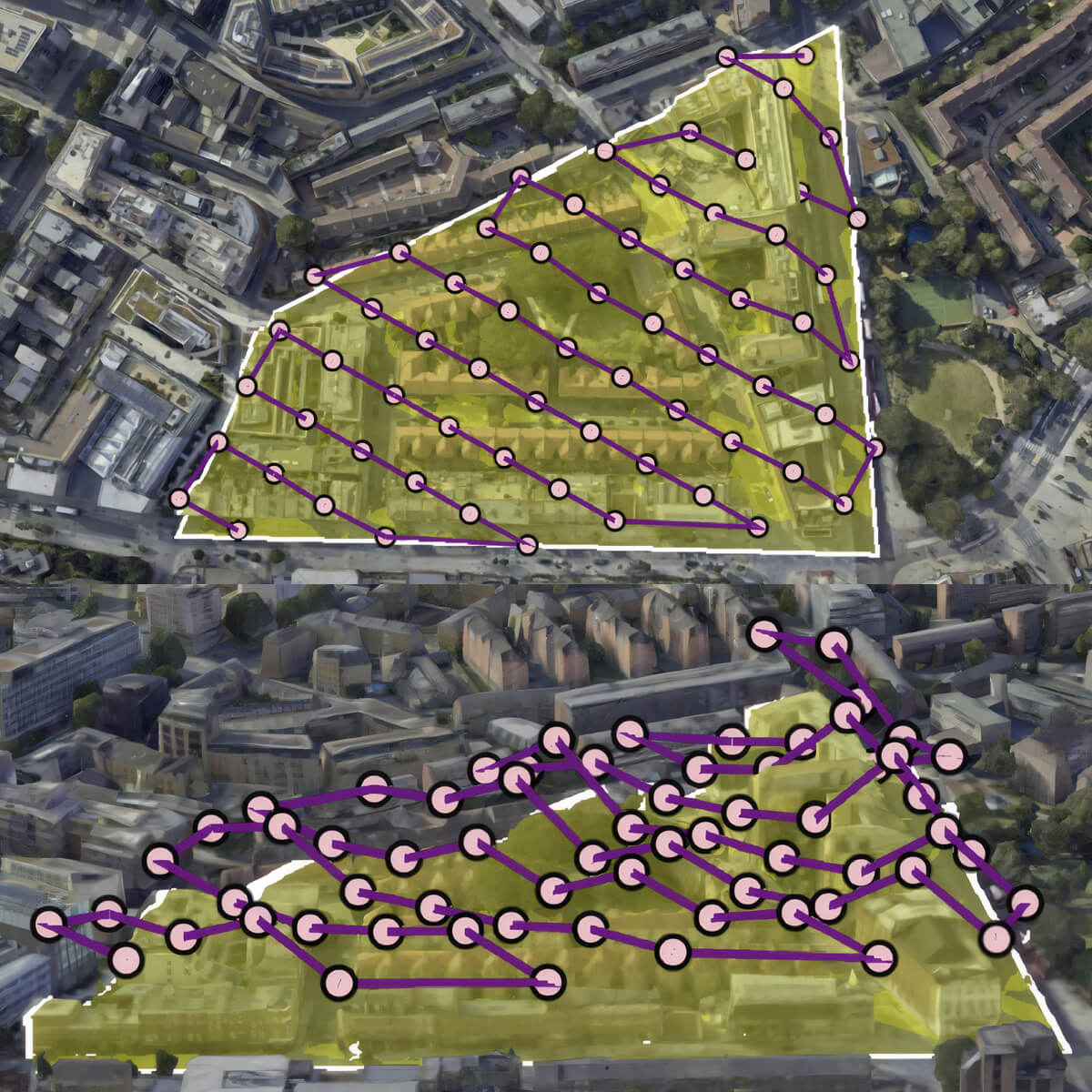
Terrain-adaptation is what separates professional-grade systems from basic planning tools.
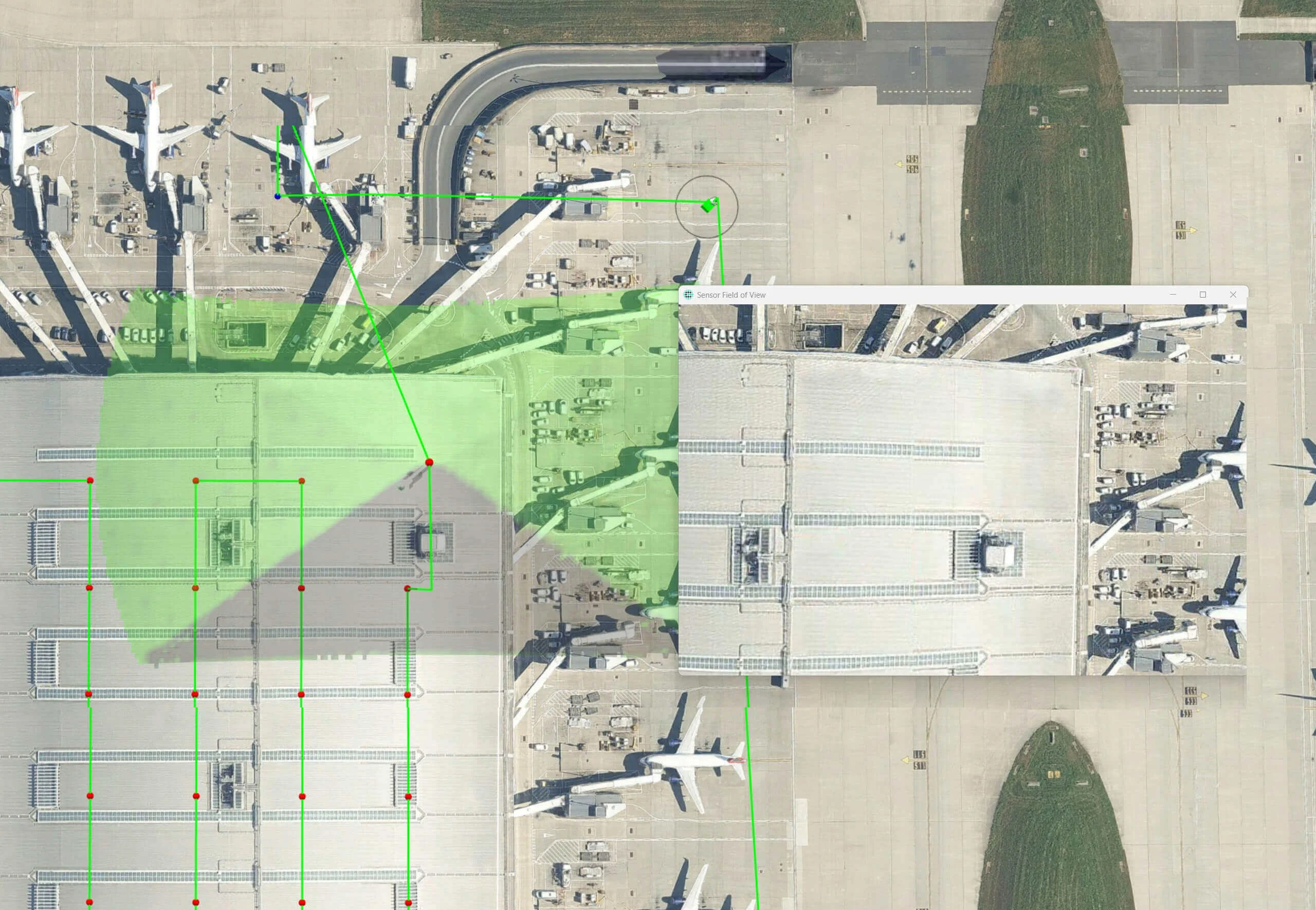
Another critical challenge is line-of-sight verification. When inspecting structures, obstacles can block camera views. Advanced pattern generators analyze terrain and structures to verify visibility before finalizing flight paths, avoiding wasted flights that capture only obstructions.
Creating effective flight patterns requires sophisticated geospatial capabilities. Systems like Carmenta Engine provide the foundation for solving these spatial challenges:
These capabilities translate directly to practical applications. When surveying irregular areas, geometric operations optimize pattern orientation to minimize flight time. For complex terrain, elevation data enables precise height adjustments that maintain image quality.
As drone capabilities expand, pattern generation continues to evolve. Emerging trends include:
The fundamental challenge remains unchanged: Complete coverage with optimal efficiency. However, increasingly sophisticated tools are making complex flight planning accessible to operators across industries.
A technical deep-dive that examines how Carmenta Engine’s line-of-sight capabilities enhance flight pattern generation for uncrewed aerial systems.
UAS mission planning and deconfliction in BVLOS drone operations. A series of videos showcasing various capabilities developed and used in the HADO project.
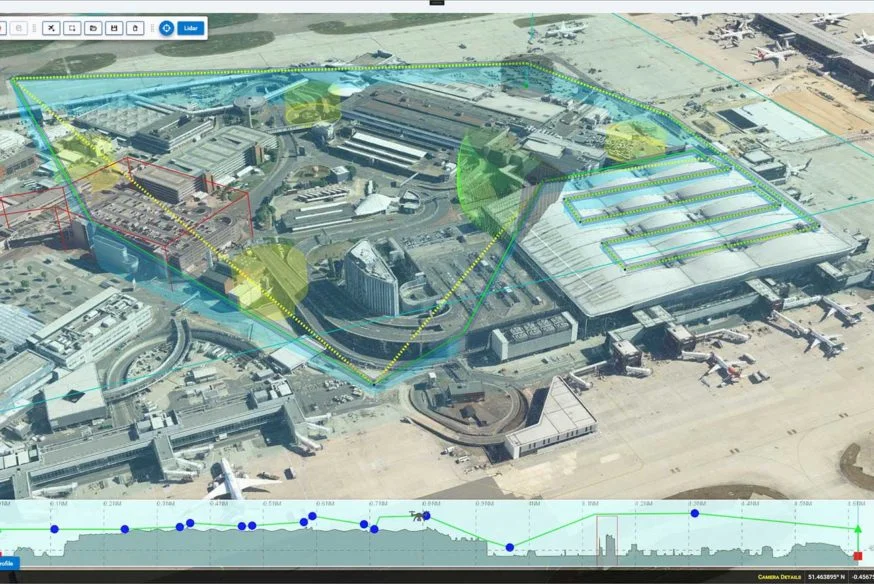
Carmenta Concludes Innovative Project on Autonomous Drone Flights in Heathrow Airport’s Flight Restriction Zone (FRZ). The HADO project paves the way for safe and autonomous drone flights in urban environments and high-intensity airspace.
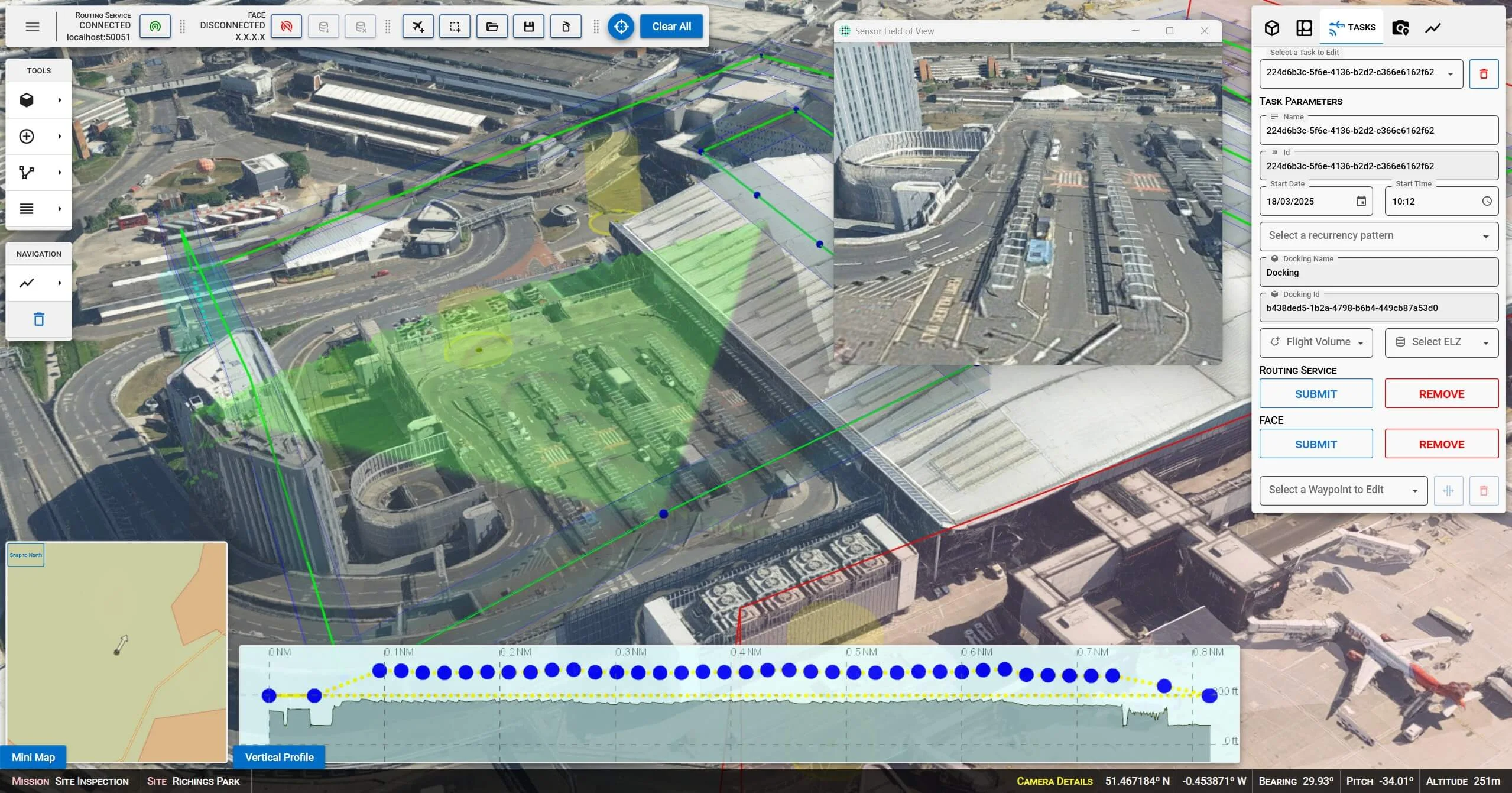
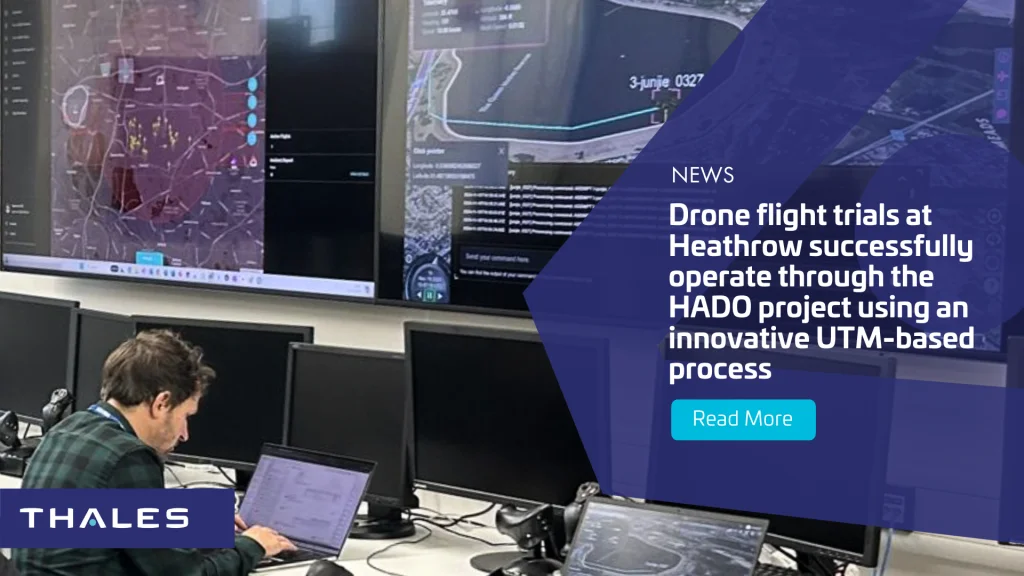
End of last year, Carmenta joined Thales, in collaboration with Herotech8 and Cranfield University, in successfully delivering a series of drone flight trials, as part of the HADO project.
Discover how Carmenta Terrain Router integrates with ROS 2 Nav2 to enable real-time UGV route replanning, terrain-aware navigation, and improved survivability.
Read more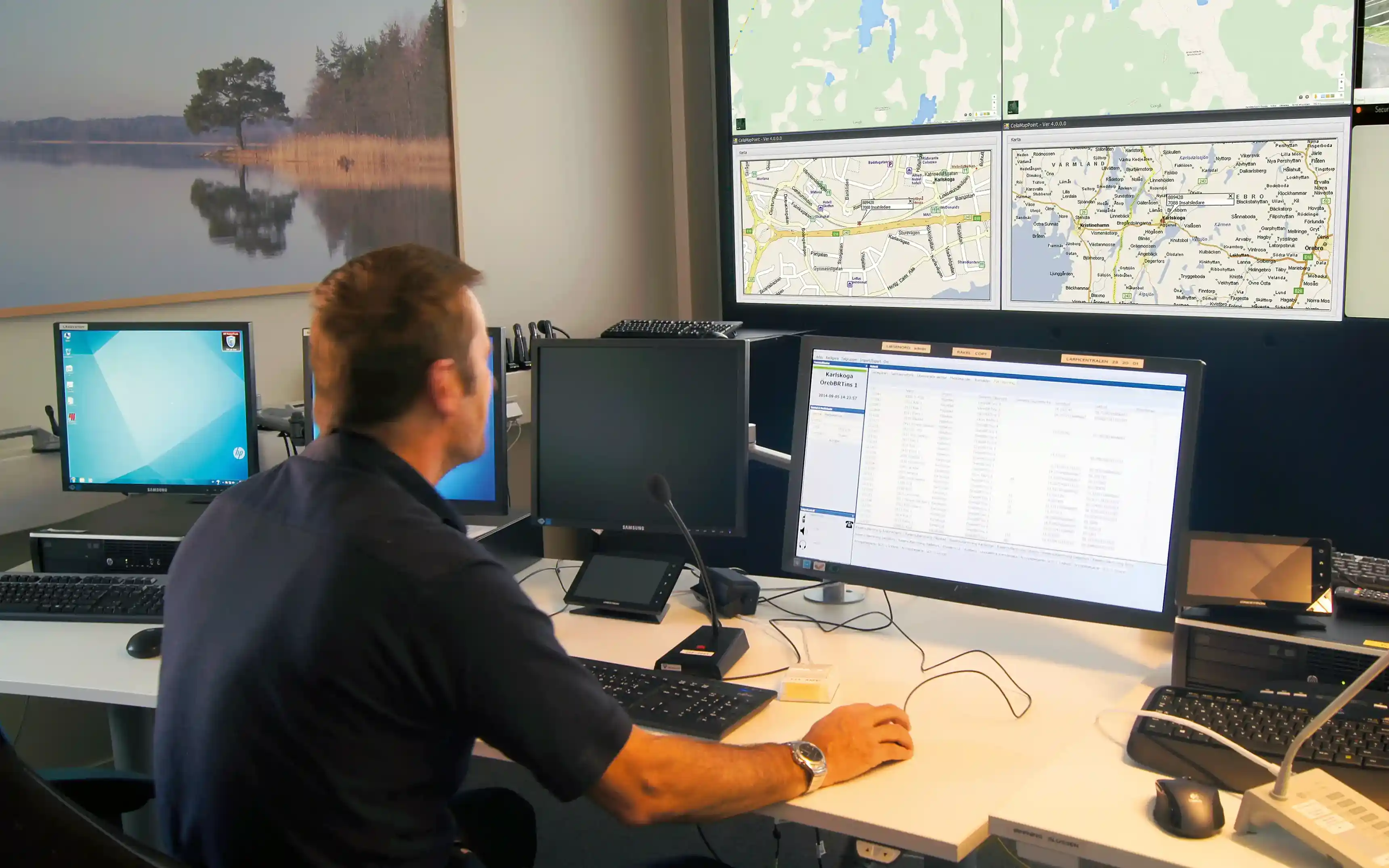
Celab Communications uses both Carmenta Engine and Carmenta Server to power solutions that enhance personal security for business personnel and first responders in the field.
Read more
The evolving threat landscape in military operations underscores the importance of precise, adaptive, and intelligence-driven mission planning. Explore how geospatial analysis empowers UAVs to adapt to these challenges by enhancing situational awareness and supporting human and autonomous decision-making processes.
Read more